Celebrating Gandhi Jayanti at Manu Maharani Resor
By Roopak Kapoor | An avid traveller
Published: October 8, 2026
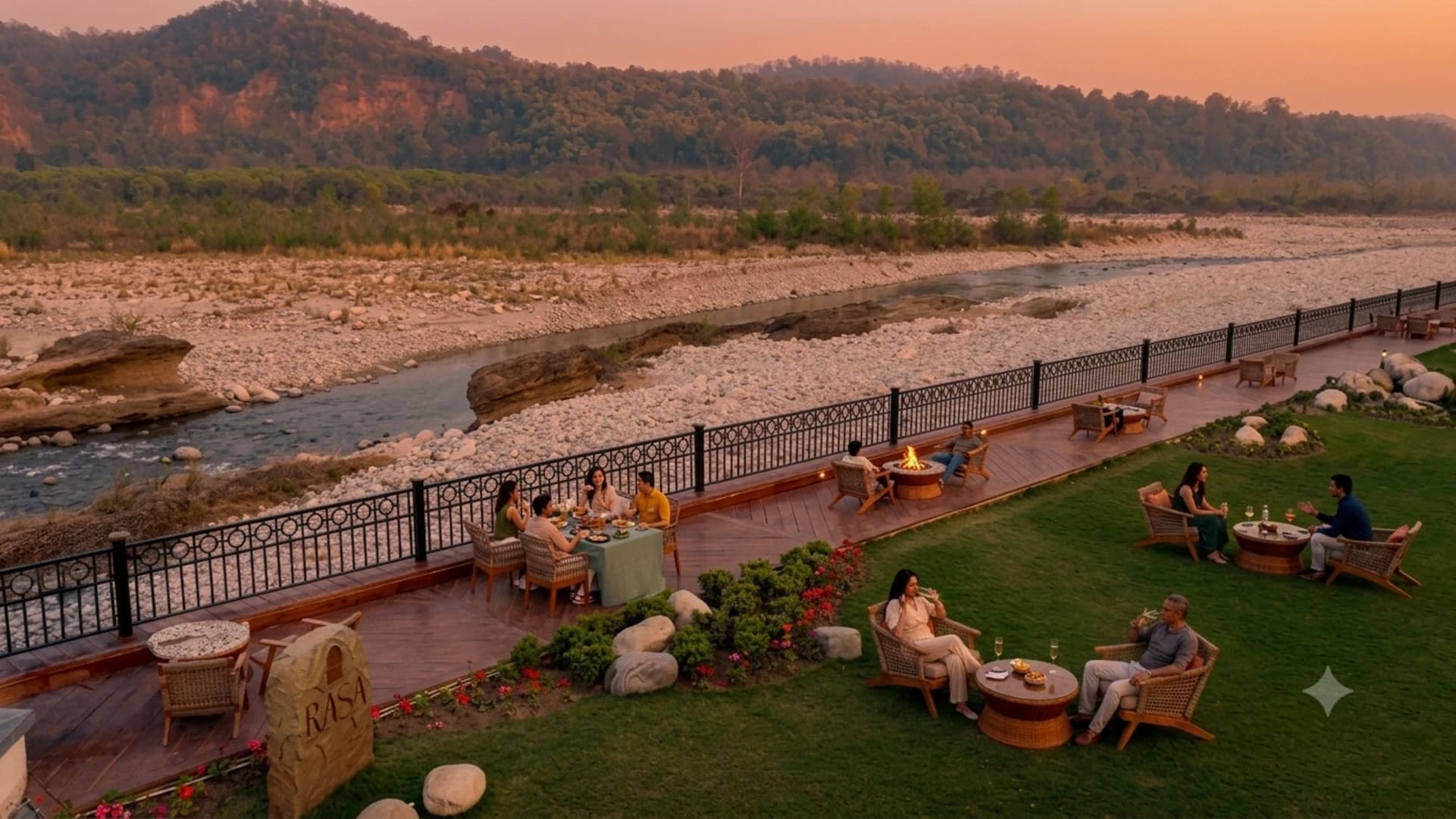
When urban routines begin to blur into relentless screen time and rushed schedules, finding a weekend of stillness feels less like an indulgence and more like a necessity. Over the long Gandhi Jayanti weekend on the 2nd and 3rd of October, I checked into the Manu Maharani Resort nestled in the lush foothills of Corbett. While I arrived expecting misty river views, fresh Himalayan breeze, and peaceful strolls across trimmed greens, what unfolded over those forty-eight hours was far more grounding than an ordinary holiday. The resort had arranged a bespoke cultural retreat titled ‘Charkha & Canvas: A Weekend of Art, Heritage & Mindfulness’.
Instead of treating the national holiday as a mere date on a calendar, the property brought the philosophy of Mahatma Gandhi to life right on the resort’s lawns. It was a celebration rooted in self-reliance, handmade beauty, and quiet, deliberate creativity. Here is a look back at an unforgettable stay where time slowed down, hands got wonderfully dirty with raw clay, and traditional crafts took center stage.
Arrival in the Valley: Nature Meets Nostalgia
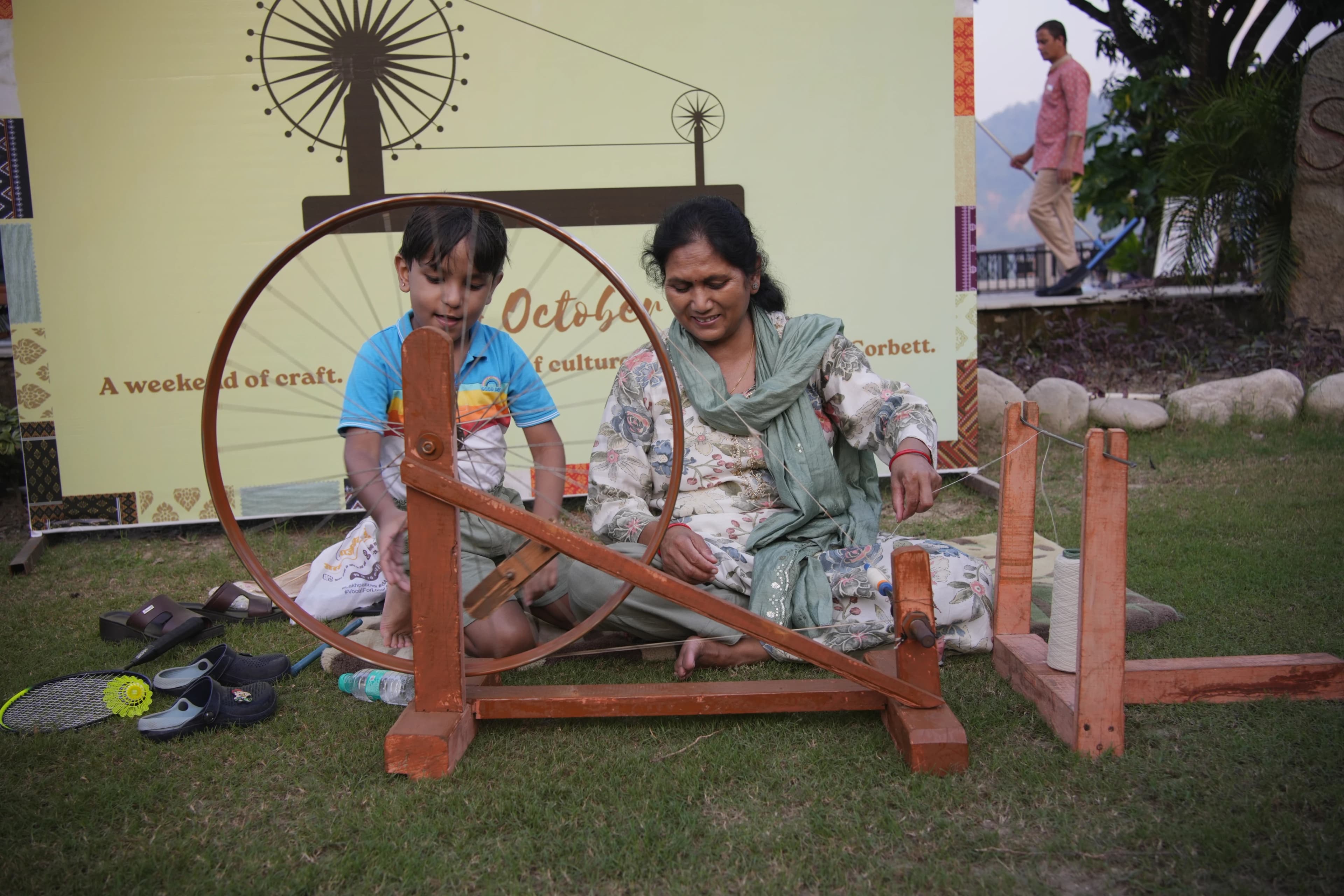
Driving up toward Corbett always offers an instant release of city tension. Stepping out onto the sprawling green lawns of Manu Maharani on the morning of October 2nd, the first thing that caught my eye was not a typical luxury banner or digital display. Under large shaded umbrellas and open mountain skies sat traditional wooden implements framed against a hand-lettered backdrop that read: "A weekend of craft. A celebration of culture. A story written in Corbett."
There was no blaring music or hurried schedule. Guests strolled about in comfortable linen and casual wear, coffee cups in hand, drawn curiously toward the rustic wooden structures resting on the lawn. Master artisans sat quietly beside their tools, ready not just to demonstrate, but to share their legacy with anyone willing to sit down and listen.
The Meditative Rhythm of the Charkha
For most of us born in modern times, the charkha exists primarily in history textbooks, patriotic songs, and black-and-white archives. Watching one operated live in the crisp morning air felt almost sacred.
Seated cross-legged on woven mats laid over the grass, skilled spinners guided the spinning wheel. With gentle precision, raw cotton roving turned into thin, durable thread as the wheel spun with a low, rhythmic hum. What struck me most was how quickly guests of all ages were drawn into the process.
Children sat side by side with the artisans, wide-eyed as they held raw cotton between their fingers, learning to regulate their tension so the delicate strand wouldn’t snap. The artisans were remarkably patient, gently placing their hands over ours, showing us that spinning yarn is entirely about presence of mind. You cannot spin a charkha while thinking about your inbox; if your mind wanders, the thread breaks. Watching families and young kids sit spellbound for half an hour, completely captivated by the turning wheel, was proof of the enduring magic of simple, mindful work.
The Grand Wooden Loom: Weaving History
A few paces away stood a full-scale traditional wooden handloom, a marvel of timber beams, pedals, hanging heddles, and taut white warp threads.
Watching an artisan work the shuttle was like observing poetry in motion. The rhythmic clack of the wooden frame, the steady tap of foot treadles, and the smooth slide of the shuttle carrying the weft yarn back and forth created a mesmerizing tempo. Guests were invited to climb onto the bench and try their own hand at weaving a few picks of fabric.
Reaching across the wooden beam, guiding the shuttle, and feeling the tight web of yarn press together gave me an immediate, profound respect for handmade textiles. In a world dominated by instant gratification and fast fashion, experiencing the slow, millimetre-by-millimetre emergence of handwoven cloth felt deeply grounding. It brought Bapu’s philosophy of Khadi into crystal clarity: clothing isn't just a commodity; it represents patience, human touch, and honest labor.
Earth and Water: Magic at the Potter’s Wheel
By the afternoon, the energetic heart of the lawn shifted toward the potter’s wheel.
A local master potter sat on his haunches by a traditional rotating stone wheel, with buckets of water and mounds of smooth river clay within arm’s reach. With effortless flickers of his fingers and palms, a lifeless lump of grey earth transformed in seconds into a graceful, flared vase.
Then came our turn. Rolling up our sleeves, sitting beside the wheel, and plunging wet hands into cool, slippery clay was pure joy. Guests—mothers with daughters, couples, and eager little kids sporting bright sun hats—laughed as the clay wobbled beneath their fingertips before finding center.
There was genuine delight every time a child successfully shaped their first little earthen pot, lifting it gingerly between two palms to show their parents. By the time our pieces were finished and set aside to dry under the Corbett sun, our hands were dusted with terracotta, and our faces were glowing with uninhibited smiles. It was an activity that bridged generations effortlessly.
The Canvas Experience and the Handloom Pavilion
True to the event's name, Canvas complemented the Charkha. Scattered across the patio and garden tables were sketchbooks, fine-point drawing pencils, paint palettes, and brushes. Children sat engrossed in color washes, painting scenic mountain backdrops and floral impressions, while parents joined in or relaxed with cold beverages nearby.
Adjacent to the workshop stations was an open-air display of artisanal textiles. Rows of vibrant shawls, hand-embroidered stoles, woven wraps, and printed scarves hung under the afternoon sun. It wasn't just a shopping rack; guests spent time talking with the vendors, learning about the weaving traditions, natural vegetable dyes, and regional motifs behind each piece. Picking up a couple of handwoven stoles directly from the artisans felt infinitely more rewarding than browsing an upscale department store.
Mindfulness, Food, and Unhurried Conversations
Beyond the craft stations, what made the stay at Manu Maharani stand out was the sheer unhurried ambience. Between learning how to operate the shuttle on the loom and waiting for our pottery to set, we lounged on comfortable patio chairs gazing at the surrounding hills.
Evenings at the resort transitioned into warm hospitality: candlelit dinners under the clear sky, rich regional and continental spreads, and warm conversations around the day's experiences. Guests who had met just hours earlier at the spinning wheel found themselves trading stories over dinner, united by the shared warmth of an authentic weekend.
A Weekend to Remember
Leaving Manu Maharani on October 3rd, I packed more than just resort memories and souvenirs. Tucked safely in my bag were a handwoven scarf, a sun-dried clay pot crafted by hand, and a notebook filled with spontaneous sketches.
In honoring Gandhi Jayanti, Manu Maharani did not just host an event; they created a thoughtful space where traditions were celebrated, hands-on learning was embraced, and mindfulness felt entirely natural. It was a vivid reminder that sometimes, the most luxurious thing you can do is slow down, spin a wheel, shape some earth, and reconnect with the simple joys of craft and community.
For anyone seeking a getaway that nurtures the soul as much as it relaxes the body, this weekend in Corbett set a benchmark that will stay with me for a very long time.
Plan Your Experience at Manu Maharani
Let our expert team help you create an unforgettable celebration at Manu Maharani.
Book Your Stay